Zimbabwe Economic Outlook 2025–2030
Published: March 17, 2026

By Prof. Nadeem Ahmed Faraz
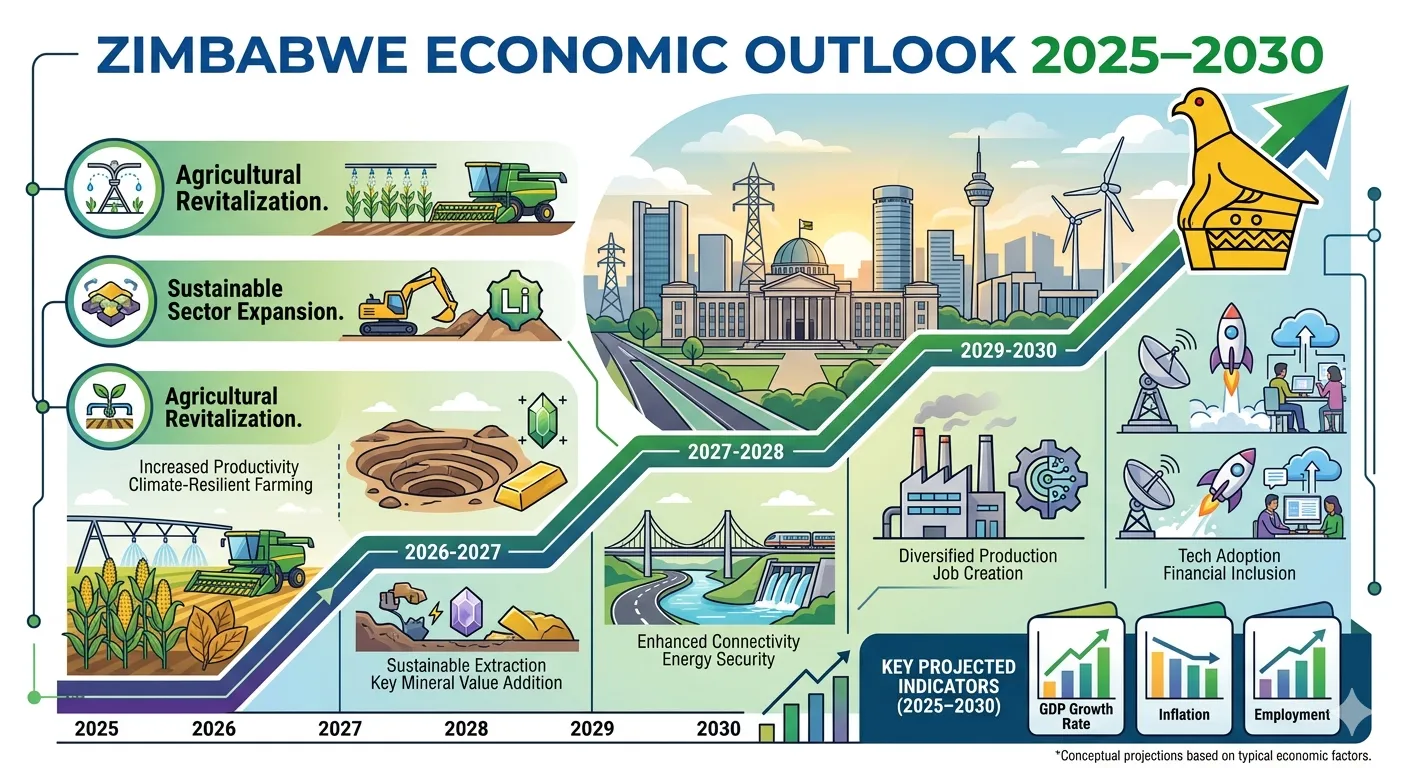
Zimbabwe, a resource-rich Southern African economy, is undergoing gradual macroeconomic stabilization supported by strong export-led recovery. The population stands at approximately 17.4 million in 2025 and is projected to reach 19.3 million by 2030, indicating steady demographic growth and market expansion potential.
Macroeconomic Overview (2025)
- GDP (Nominal): Approximately $53.3 billion
- GDP Growth: Around 6.0% driven by mining and agriculture
- Inflation: Approximately 89%, showing a declining trend
- Employment: Over 60% in the informal sector
- GDP Projection (2030): ~$63.7 billion with ~3.5% stable growth
Production & Key Sectors
Zimbabwe’s economy is anchored in key sectors including mining, agriculture, and emerging manufacturing industries. Mining dominates exports, particularly gold (approximately 45% of exports), along with lithium and nickel—critical for global energy transitions. Agriculture remains vital with tobacco, maize, and horticulture as primary outputs, while construction and manufacturing are growing contributors.
Trade Structure (2025)
- Exports: Approximately $8.5 billion
- Imports: Around $9–9.5 billion
- Total Trade Volume: ~$18 billion
- Trade Balance: Improving deficit
Major Export Destinations: China, South Africa, UAE
Major Import Sources: South Africa, China, Mozambique
Global Trade Share: Less than 0.05% (emerging economy)
Pakistan–Zimbabwe Trade (2025)
Bilateral trade between Pakistan and Zimbabwe is estimated between $30–50 million. Pakistan primarily exports pharmaceuticals, rice, and textiles, while imports include minerals and tobacco in limited quantities. This reflects significant untapped trade potential.
Strategic Guidance for Pakistan
- Mining & Lithium Investment: Zimbabwe is a leading lithium hub with strong potential for battery supply chains.
- Agriculture Collaboration: Opportunities in tobacco, maize, and agri-tech joint ventures.
- SME & Construction Entry: Rising demand in infrastructure and housing sectors.
- Trade Gateway Strategy: Position Zimbabwe as an entry point into the SADC regional market.
- Digital & Financial Services: Untapped fintech sector with high ROI potential.
Strategic Insight
Zimbabwe represents a high-risk, high-reward frontier market. With improving exports, mineral wealth, and macroeconomic reforms, the country is transitioning toward resource-driven industrialization. For Pakistan, early strategic positioning can unlock long-term economic and geopolitical advantages in Africa.
References
- International Monetary Fund (IMF) – World Economic Outlook Database 2025
- GOV.UK – Zimbabwe Economic Overview
- Zimbabwe National Statistics Agency (ZimStat) – Trade Data 2025
- World Trade Organization (WTO) – Trade Profile Zimbabwe
- Reuters (2025) – Inflation & Export Sector Updates
- Zimbabwe Central Bank – Economic Reports 2025