Post-War Education Policy Framework for Schools in Pakistan
Published: April 8, 2026
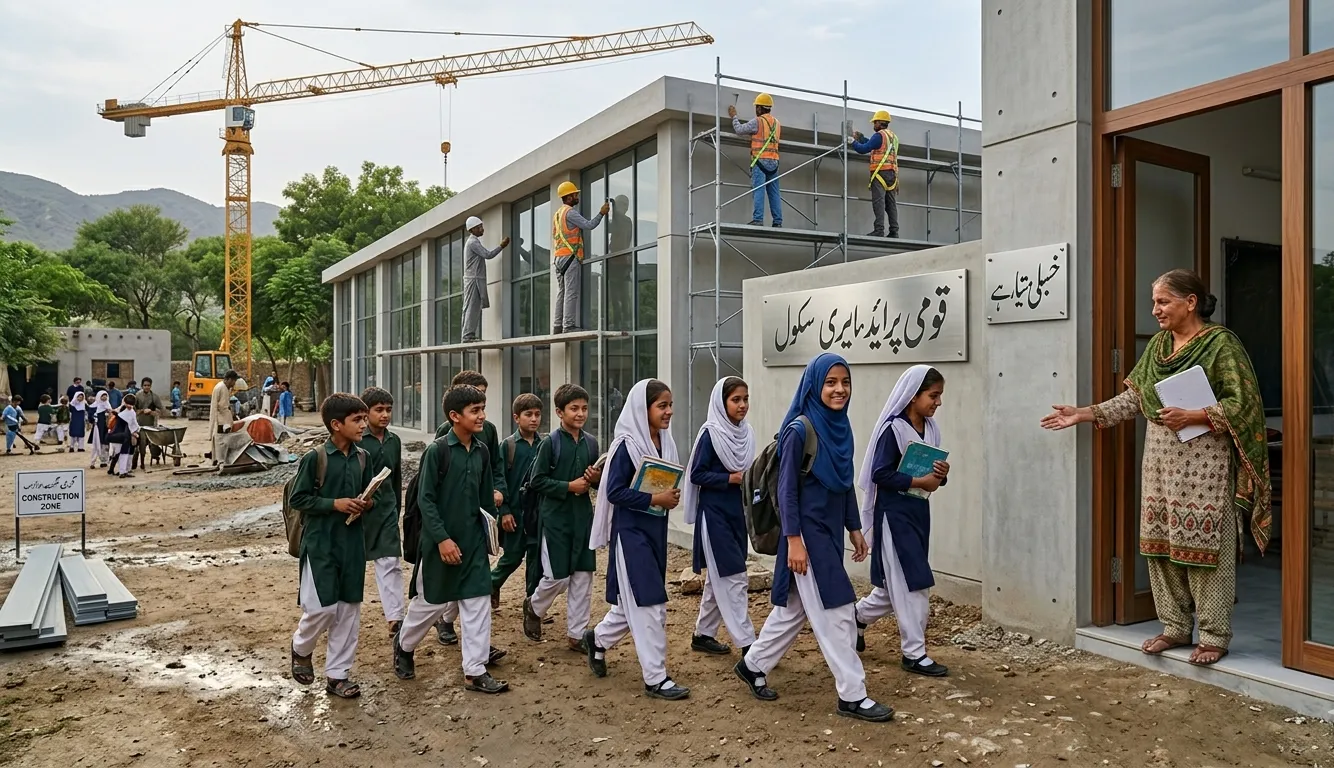
A Strategic Blueprint for Recovery & Future Readiness
By Prof. Nadeem Ahmed Faraz
Research Analyst | Global Business & Education Advisor | Strategic Policy Expert
Chairman, PERTC – Pakistan Economic Research & Training Centre
Abstract
In post-war environments, education systems face disruption in learning continuity, psychological well-being, and institutional stability. For Pakistan, a Post-War Education Policy must go beyond recovery to strategically rebuild human capital and prepare learners for a dynamic global future.
Policy Priorities
1. Accelerated Learning & Academic Recovery
Introduce Accelerated Learning Programs (ALPs) and bridge courses to address learning loss. Curriculum should be streamlined, focusing on core competencies such as literacy, numeracy, and critical thinking.
2. Psycho-Social Support & Emotional Development
Embed trauma-informed education by training teachers in psychological support and integrating Emotional Intelligence (EQ) into daily learning to restore confidence and stability among students.
3. Digital Transformation & Hybrid Learning
Develop low-cost digital infrastructure and promote blended learning models. Establish community-based digital hubs to ensure access for underserved populations.
4. Curriculum Reforms for Future Readiness
Align curriculum with 21st-century skills, incorporating Artificial Intelligence, digital literacy, entrepreneurship, and peace education to foster resilience and global citizenship.
5. Teacher Capacity Building
Invest in continuous professional development, focusing on adaptive pedagogy, technology integration, and crisis-responsive teaching methodologies.
6. Equity & Inclusion
Ensure access for marginalized groups, especially girls and displaced students, through scholarships, flexible schooling models, and community engagement initiatives.
7. Public-Private Partnerships (PPP)
Mobilize resources through collaboration with private institutions, NGOs, and international organizations for infrastructure, innovation, and capacity enhancement.
Implementation Strategy
Short Term (0–6 months): Emergency learning centers, rapid curriculum adjustment
Medium Term (6–24 months): Infrastructure restoration, digital integration
Long Term (2–5 years): Full-scale transformation towards research-based, future-ready education
Conclusion
A Post-War Education Policy is a nation-building imperative. Pakistan must transition from recovery to reinvention by fostering an education system that is resilient, inclusive, and future-oriented. By integrating technology, emotional intelligence, and innovation, schools can develop globally competent, ethically grounded, and forward-thinking citizens capable of shaping a stable and prosperous future.
References
- UNESCO (2021)
- World Bank (2022)
- UNICEF (2020)
- OECD (2021)
- INEE Framework
- ADB Reports
- Government of Pakistan Education Reports
- Harvard Education Research