Pakistan’s Digital Economy Revolution: Freelancing as a Catalyst for Growth
Published: April 11, 2026

The digital economy has emerged as a transformative force reshaping global labor markets and economic structures. Pakistan, with its large youth population and increasing internet penetration, is rapidly positioning itself as a key player in the global freelancing ecosystem. This study examines the rise of freelancing in Pakistan, its economic implications, and the policy measures required to sustain long-term growth.
Introduction
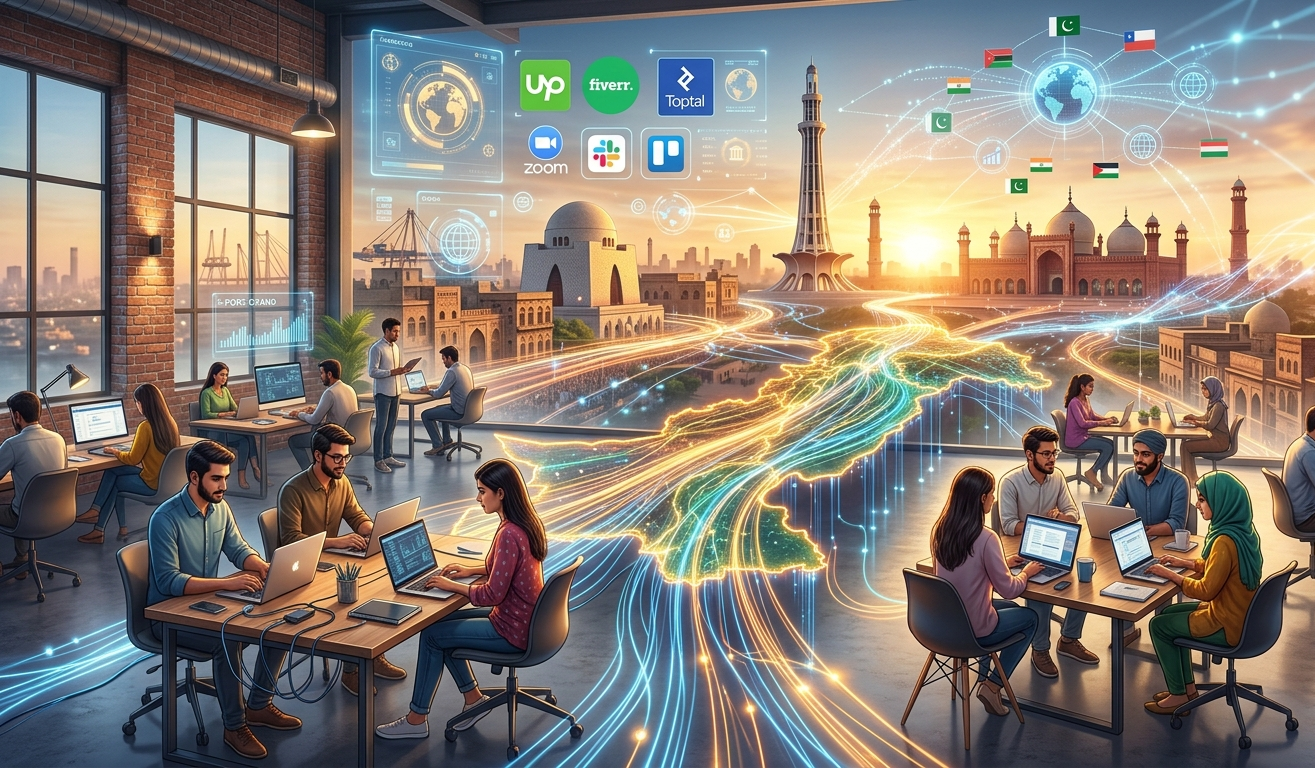
The shift from traditional employment to digital work has accelerated worldwide, driven by technological advancements and platform-based economies. Pakistan has capitalized on this transition, with freelancers actively engaging on global platforms such as Upwork and Fiverr. Cities like Karachi have become hubs of digital professionals contributing to international markets.
Growth and Economic Impact
Pakistan ranks among the top countries in online labor supply, with freelancers offering services in IT, design, and digital marketing. The sector contributes significantly to service exports and foreign exchange earnings. According to the World Bank, digital platforms enhance productivity and enable inclusive economic participation, particularly in developing economies.
Freelancing has also created employment opportunities for youth and women, reducing dependency on traditional job markets and fostering entrepreneurship.
Challenges
Despite its growth, the freelancing sector faces critical challenges. These include a persistent skills gap, limited access to international payment systems, and the absence of a comprehensive regulatory framework. The International Labour Organization highlights concerns regarding job security and social protection in gig-based work environments. Additionally, infrastructural limitations, particularly in connectivity, hinder scalability.
Policy Recommendations
Strategic Interventions
- Launch national digital skills programs aligned with global market demand
- Improve financial systems to facilitate secure international payments for freelancers
- Strengthen regulatory frameworks to support gig and remote work ecosystems
Institutional Development
- Invest in digital infrastructure, including broadband expansion and connectivity improvement
- Encourage research and training initiatives through institutions such as PERTC
- Promote public-private partnerships to scale digital employment opportunities
Conclusion
Freelancing represents a powerful avenue for economic growth and global integration. With targeted policy reforms and investment in human capital, Pakistan can transition from a freelancing hub to a comprehensive digital economy leader, ensuring sustainable and inclusive development.
References
- World Bank. (2023). World Development Report.
- International Labour Organization. (2022). World Employment Outlook.
- Pakistan Software Export Board. (2024). IT Export Report.
- Upwork. (2023). Freelance Forward Report.
- Fiverr. (2023). Global Trends Report.