Future-Ready Montessori Education (Ages 3–7) A Strategic Vision for Modern Schools
Published: April 15, 2026
Future-Ready Montessori Education (Ages 3–7) A Strategic Vision for Modern Schools
Executive Insight
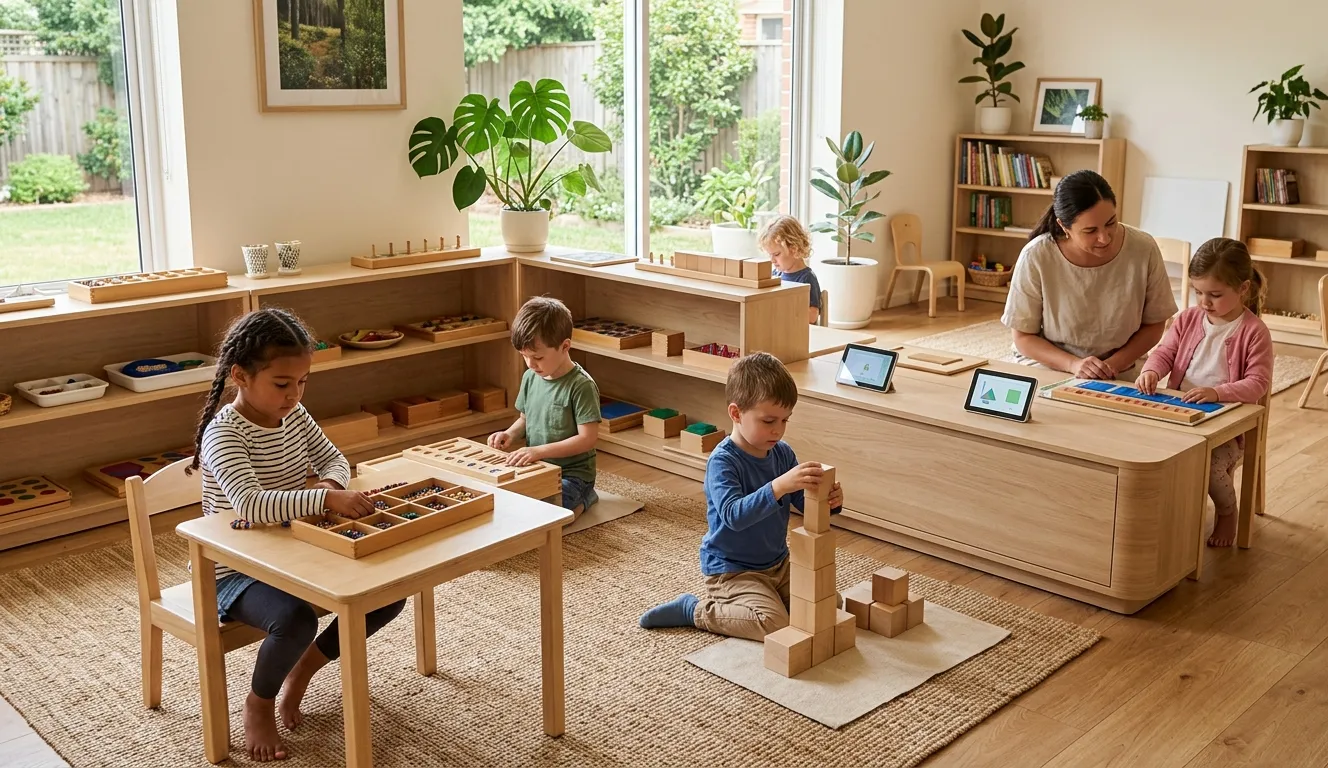
In an age defined by artificial intelligence, rapid change, and global interconnectivity, early childhood education must be reimagined as the foundation of future leadership. The Montessori stage (ages 3–7), inspired by Maria Montessori, is no longer merely preparatory—it is strategic. It shapes cognition, character, and creativity at a stage when the brain develops most rapidly (UNICEF).
This framework presents a refined, future-aligned set of objectives for modern Montessori sections—designed to nurture independent thinkers, emotionally intelligent individuals, and adaptive innovators.
Core Strategic Objectives
- 1. Cultivating Independent & Self-Driven Learners: Empower children with choice, responsibility, and ownership—laying the foundation for lifelong learning and leadership.
- 2. Building Cognitive Excellence & Thinking Skills: Develop early critical thinking, executive function, and problem-solving through experiential, inquiry-based engagement (Harvard Center on the Developing Child).
- 3. Embedding Emotional Intelligence & Inner Stability: Nurture self-awareness, empathy, and emotional regulation—core competencies for future success in human-centric economies.
- 4. Introducing Digital Awareness with Purpose: Adopt a balanced “screen-smart” approach, fostering computational thinking and responsible interaction with technology (OECD).
- 5. Advancing Communication & Multilingual Fluency: Strengthen expression, listening, and early literacy to build confident communicators in a globalized world.
- 6. Igniting Creativity, Curiosity & Innovation: Encourage questioning, imagination, and exploration—transforming learners into early-stage innovators.
- 7. Developing Social Intelligence & Leadership Seeds: Promote collaboration, respect, and peer learning—planting the seeds of ethical leadership and teamwork.
- 8. Strengthening Physical, Sensory & Motor Foundations: Enhance coordination, movement, and sensory integration—critical for both cognitive and physical development.
- 9. Instilling Environmental Responsibility & Civic Values: Develop conscious, responsible individuals aligned with sustainability and global citizenship (UNESCO).
- 10. Creating a Love for Learning & Future Adaptability: Inspire curiosity, resilience, and adaptability—ensuring readiness for an unpredictable and evolving future.
Visionary Conclusion
A modern Montessori section must evolve into a “Future Readiness Lab”—where learning is not confined to literacy and numeracy, but expanded to thinking, feeling, creating, and leading.
Such an environment does not merely prepare children for school—it prepares them for life, leadership, and the world of 2050.
References
- UNICEF
- OECD
- UNESCO
- Harvard Center on the Developing Child
- The Absorbent Mind