AI & Modern Teaching Methodologies at School in the Age of AGI
Published: Febraury 7, 2026
Article
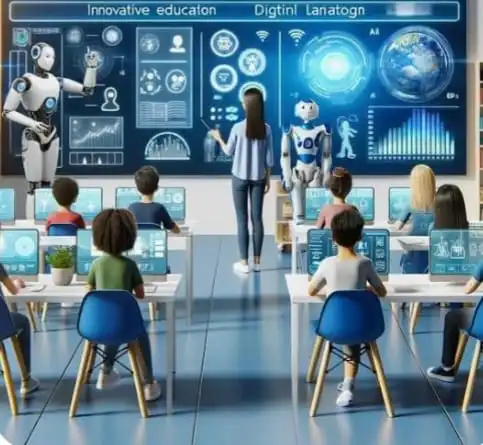
Education stands at a historic crossroads. As Artificial Intelligence (AI) rapidly advances toward Artificial General Intelligence (AGI), schools are no longer preparing students merely for exams, but for a future defined by intelligent systems, constant change, and human–machine collaboration.
AI-driven teaching methodologies are transforming classrooms into personalized learning ecosystems. Research shows that adaptive AI platforms can improve student engagement and academic performance by identifying individual learning gaps, adjusting pace, and providing real-time feedback. For many students—especially those who struggle in traditional classrooms—AI acts as a patient, non-judgmental learning companion, offering support without fear or fatigue.
Yet the true power of AI in education lies not in replacing teachers, but in restoring their humanity. By automating routine tasks such as grading and data analysis, AI gives teachers the precious gift of time—time to mentor, inspire, listen, and nurture emotional intelligence. In the age of AGI, teachers become architects of thinking, cultivating curiosity, ethical reasoning, creativity, and resilience—qualities no algorithm can replicate.
However, this transformation must remain human-centered. UNESCO and the OECD both caution that unchecked AI use may weaken critical thinking, deepen inequality, and compromise student privacy. Schools must therefore embed ethical frameworks, digital literacy, and equity-focused policies alongside AI integration.
Ultimately, AI is a tool—but education is a human mission. When guided by wise educators and ethical leadership, AI-enabled teaching can empower learners not just to survive the age of AGI, but to lead it with purpose, compassion, and wisdom.
References
-
UNESCO – Artificial Intelligence and the Future of Education
https://www.unesco.org/en/artificial-intelligence/education -
OECD – AI in Education: Opportunities and Policy Challenges
https://www.oecd.org/education/ai-in-education/ -
Holmes, W. et al. – Artificial Intelligence in Education: Promise and Implications
https://www.sciencedirect.com/science/article/pii/S0360131520300957
By Prof. Nadeem Ahmed Faraz